
Ekpang Nkukwo was a high in demand recipe from many of the Afrolems fans. I posted the photo of the meal seven days to Christmas and since then Ekpang Nkukwo has been on the mind of many of my Afrolems followers. It is a native Efik meal and apparently is also native to Cameroonians. The English name is coco-yam pottage and the Efik name is Ekpang Nkukwo. Here is the recipe below, hope you enjoy it.
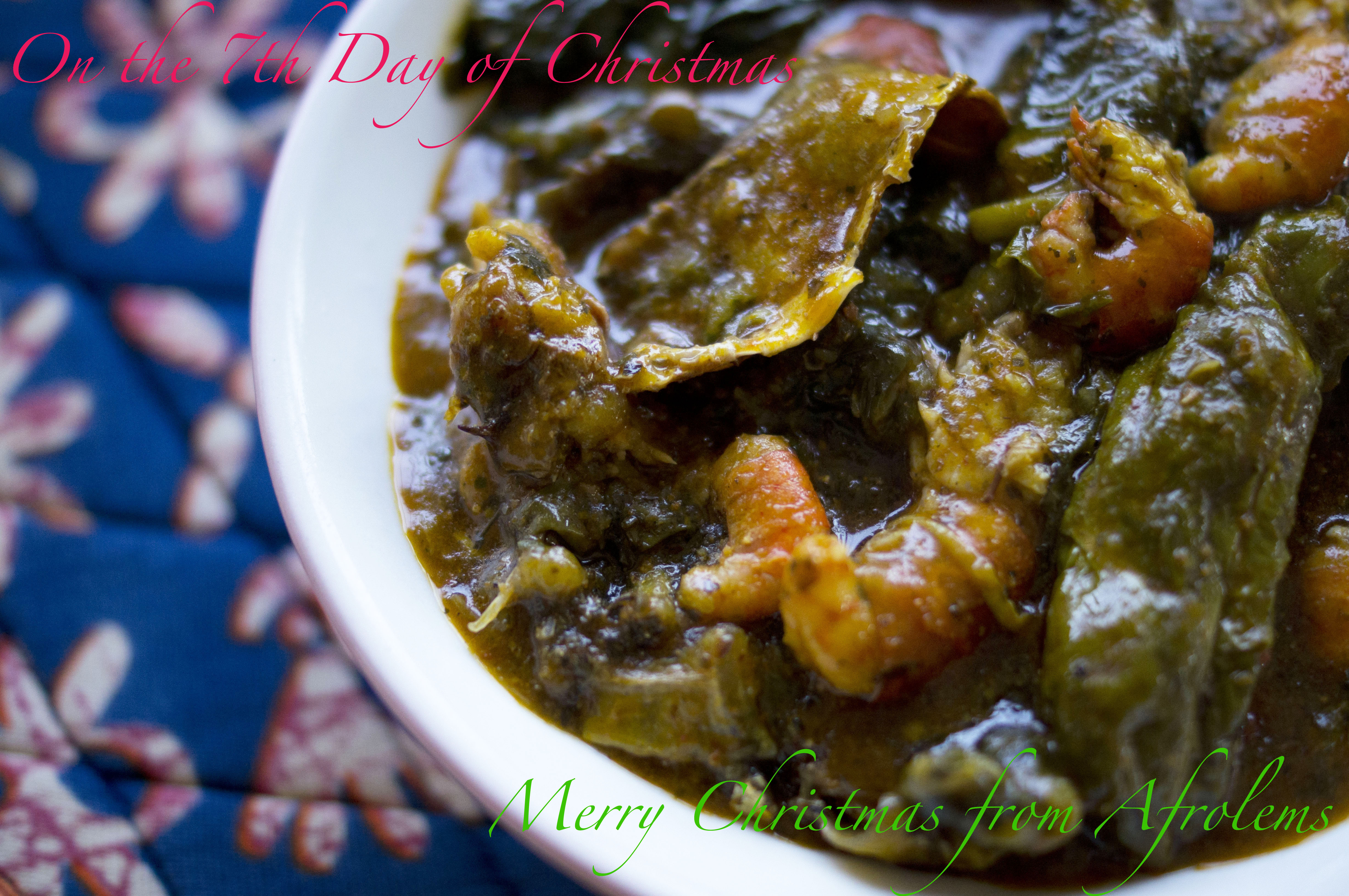
Ekpang Nkukwo
Recipe for Ekpang Nkukwo
Ingredients
8 medium tubers of cocoyam
1 bundle of cocoyam leaves (Substitute : spinach or lettuce)
1.5 cups of periwinkles with their shell
Dry fish
1 cup of crayfish
1 cup of tiger shrimps
4 cubes of maggi
1.5 tablespoons of dry pepper
½ teaspoon Crushed dry bitter leaves
1 tablespoon blended crayfish
4 cups of water
3 cooking spoons of palm oil.
Method
Peel and grate your coco-yam
Wash your cocoyam leaves and cut into small pieces (alternative- baby spinach leaves)
Grease your pot with a cooking spoon of palm oil
Line your pot with periwinkles and season with a teaspoon of salt, pepper and 2 cubes of Maggi cube.
Boil 1.5 cups of water
Scoop some cocoyam onto your leaves and wrap them till the edges of the cocoyam are sticking out on both ends of the leaves.

wrapping the ekpang nkukwo
Once this is done, put the pot of the cocoyam on low heat and let it heat up for about 10 minutes.
Season with 1 table spoon of salt, 1 table spoon of dry red chilli peppers, 2 cubes of maggi, a pinch of crushed dry bitter leaves and a tablespoon of blended crayfish.
Add dry fish, shrimp, and dry crayfish but don’t stir in.
Pour in the hot water slowly around the edges and still leave on low heat for 5 more minutes.
Increase the temperature to medium heat and pour in 2 cups of water as your pottage cooks. Cook for 20 minutes on medium heat with a covered pot.
Add more water as need be until the cocoyam at the ends of the leaves start to harden.
Stir your pottage gently at this point and reduce to low heat for cook for 5 more minutes.
Pour in 2 cooking spoons of palm oil, stir in and leave to simmer on low heat for 5 minutes and ekpang nkukwo is served.
Side note: the efiks traditionally mix the cocoyam with water-yam to improve the consistency especially if its new cocoyam. You may want to try that as well.
Pingback: Cocoyam Chips and Peppered Garlic Shrimp
Pingback: Coconut Cocoyam Dessert - Afrolems Nigerian Food Blog